
Embossing vs Debossing in Custom Packaging with Application

When a customer picks up your box, the texture they feel in the first half-second shapes everything that follows. Before your customer reads your brand name, they see your logo in full color. Their fingertips have already told them something that is unique about your product. This tactile first impression of your product packaging is exactly what embossing and debossing deliver.
Whether you are designing luxury cosmetic boxes in Los Angeles, minimalist apparel packaging in New York, or custom rigid boxes for a subscription brand in Texas, understanding the difference between embossing and debossing is far more important than others.
Key Takeaways
In this guide of Little Rock Packaging that is written by experts UMR (Packaging Engineer) and reviewed by LRP’s team (Packaging Specialists), you will learn:
- Explanation of Debossing and Embossing with Key Differences
- Application and Benefits of Using these Ads on Products.
- Proper Application process followed by custom packaging company to deliver embossing and Debossing work.
- Key Considerations before using these materials.
- Usage of these ads on material in different industries.
In the end you will have cleared all the doubts related to this topic and move forward to order customized packaging of your product by adding these ads on material through the best customized packaging company, Little Rock.
Understand Embossing vs Debossing: Key Differences
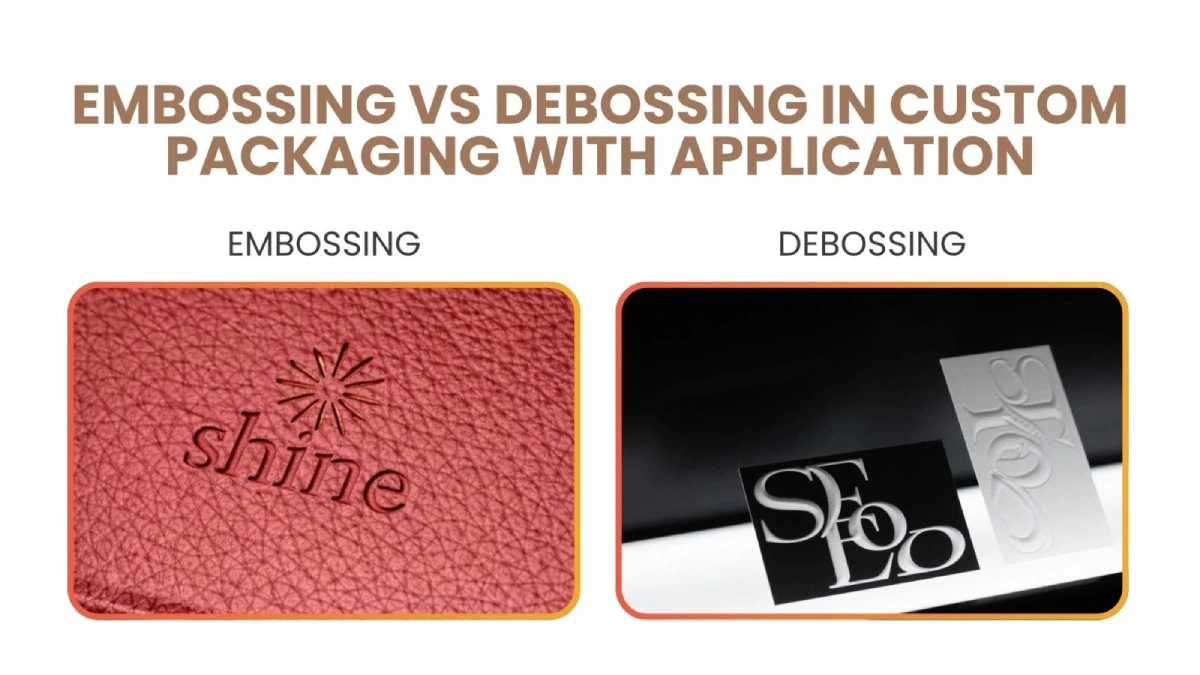
At the most basic level, embossing and debossing are opposite processes that produce opposite results. What are the opposite results? The answer is one raises and other is recesses. Both use pressure and custom-made dies to permanently alter the surface of packaging material.
Embossing Method
Embossing raises a design element above the surrounding surface of the material. The result is a three-dimensional image that stands out and catches light from multiple angles. Run your finger across an embossed logo and you feel it lift off the page. Embossing creates a sense of depth and prominence — it says the design is coming toward you.
Debossing Method
Debossing presses a design feature beneath the surface, forming an impression that is indented within the material. A logo with a debossed embossed design is within the packaging, instead of being displayed above it. The result is more quiet subtle, less overtly and more often associated with minimalist, refined design aesthetics for brands. Take a stab at the surface that has been debossed and you can feel the design sinking into the fabric.
The most important distinction beyond the visual is that embossing pushes upwards while debossing pulls inward. Both are permanent, and both can be felt, both raise packaging to levels that the combination of color and ink can accomplish.
Benefits and Applications of Debossed vs Embossed
Why Brands Choose Embossing
Embossing creates immediate visual drama. Because the design rises above the surface, it catches ambient light and creates natural shadow lines that make logos, patterns, and typography appear almost sculptural.
The technique is particularly effective for brands in the premium and luxury segment: high-end skincare, perfume, spirits, jewelry, and gift packaging all use embossing to communicate craftsmanship and quality without a single word of copy.
Embossed details also photograph exceptionally well, which matters enormously for brands selling through e-commerce channels where the unboxing experience is a core marketing asset.
Embossing works best when the design element is bold and clean. Fine lines and intricate details can lose definition in the embossing process, so logos with clear, simple geometry produce the sharpest results.
Why Top Brands Choose Debossing
Debossing has become the technique of choice for brands pursuing a minimalist or editorial aesthetic. The recessed impression is subtle, sophisticated, and deeply tactile without being visually loud. Many of the world’s most recognized luxury brands that are particularly working in the fashion and lifestyle industry, have moved toward debossed packaging precisely because it feels restrained and intentional.
Debossed logos on kraft boxes, debossed branding on rigid apparel packaging, and debossed monograms on candle boxes have all become visual shorthand for a certain type of considered, premium brand identity in the U.S. market.
The technique also tends to hold its appearance well over time, since the impression is protected within the surface rather than exposed above it.
In these boxes by industry catalogue from Little Rock Packaging, you’ll see that each product design includes material customization options, with embossing and debossing available as finishing choices.
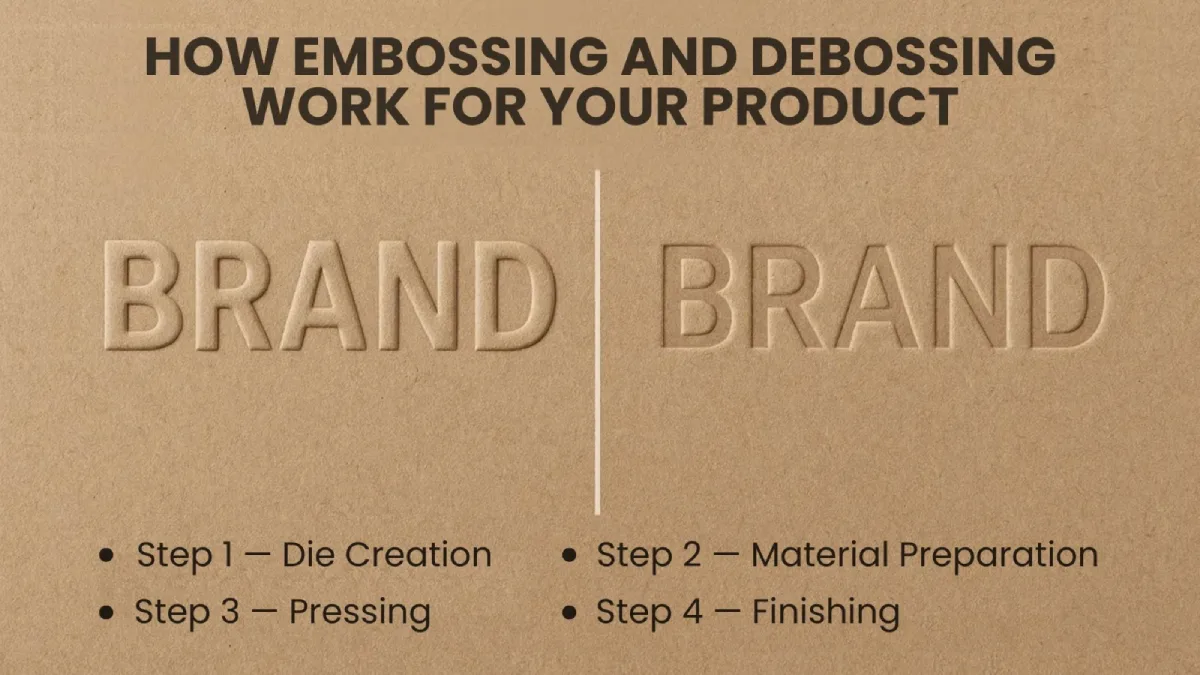
How Embossing and Debossing Work for Your Product
Both techniques follow a similar production process, with one key directional difference in how the dies are positioned.
Step 1 — Die Creation: A custom metal die is machined or engraved with your design. This is the most significant upfront cost in either process. Die costs in the USA typically range from $150 to $500 or more depending on the size and complexity of the artwork. Once a die is made, it can be used across very large production runs, spreading the cost across many units.
Step 2 — Material Preparation: The packaging material — whether cardboard, kraft, rigid board, or specialty paper — is cut and prepared for the press. Material thickness and density affect how cleanly the impression transfers.
Step 3 — Pressing: For embossing, the male die (raised) is positioned below the material and the female die (recessed) above. Pressure and, in most cases, controlled heat are applied to force the material upward into the female die. For debossing, the positions are reversed — the male die presses down from above, driving the material into the female counter die below.
Step 4 — Finishing: The finished panels are inspected, trimmed, and integrated into the full packaging production run. Embossing and debossing can be combined with other finishing techniques including foil stamping, spot UV coating, and matte or gloss lamination for layered, multi-dimensional effects.
Cost, Materials, and Durability Considerations of Embossing and Debossing
Cost in the USA
Both embossing and debossing involve similar production costs since both require custom dies and specialized press time. Die creation is the primary fixed cost. It generally cost between $150 to $500 per design depending on complexity. On the other hand, per-unit costs typically range from $0.10 to $0.50 per box depending on design size, material, and order volume.
Debossing is marginally less expensive in some cases because the process exerts less stress on the material, reducing waste rates. However, the difference is rarely significant enough to make cost the deciding factor between the two techniques. For U.S. brands placing wholesale orders, the per-unit cost of either technique becomes very manageable at volumes of 500 units and above.
Note: At Little Rock Packaging, we understand both customer expectations and brand budget constraints. With our in-house production facilities, we offer competitive market pricing—allowing businesses to enhance their packaging with embossing and debossing at affordable costs. Get a Quote here.
Material Compatibility
Not every material responds equally well to embossing or debossing, and material selection should be part of your finishing conversation from the start.
- Heavyweight cardboard and SBS board perform well with both techniques and are the most common substrate for embossed or debossed custom packaging in the USA.
- Kraft paper and board are excellent for debossing in particular, as the natural fiber texture of kraft creates a beautiful contrast against the smooth pressed impression.
- Rigid boxes — the thick, fully-assembled format used for luxury product packaging — are ideal for deep debossing because the board weight supports a pronounced, durable impression.
Corrugated cardboard is generally not recommended for either technique. The fluted internal structure of corrugated board does not respond well to the pressure required, and the resulting impression is typically shallow and poorly defined. For shipping-grade packaging that requires a premium finish, a common solution is to use a custom printed corrugated outer box paired with an embossed or debossed inner box or tissue wrap.
Durability Aspect
Debossed impressions tend to be more durable over time than embossed ones. Because the design is pressed into the surface, it is protected by the surrounding material and less exposed to handling wear. An embossed design that stands above the surface is slightly more vulnerable to being flattened or abraded if boxes are stacked under weight or shipped without protective wrapping.
For e-commerce brands in the USA shipping products directly to customers, this is worth factoring into the decision. If your packaging passes through a fulfilment warehouse and multiple shipping handoffs before reaching the customer, debossing offers greater assurance that the finishing detail will arrive intact.
Note: At LRP, we prioritize eco-friendly materials that enhance your brand image while supporting sustainable practices. Our solutions are designed to reduce environmental impact while helping businesses increase customer trust and drive higher sales.
How to Use Embossing and Debossing in Your Print Projects
Step 1: Focus on a Single Design Element
Avoid overusing embossing or debossing across the entire surface. Instead, highlight one key feature such as your logo, monogram, brand icon, or a subtle pattern. This keeps the design clean and ensures the effect stands out.
Step 2: Use Restraint for Maximum Impact
Less is more. When applied selectively, embossing or debossing creates a strong focal point. Overuse can make the design look cluttered and reduce its premium appeal.
Step 3: Plan Finish Combinations Carefully
If you’re combining finishes, think about how they interact. The order and pairing of techniques significantly affect the final look and feel.
Step 4: Apply Foil Stamping Before Embossing
For a premium, eye-catching result, apply foil stamping first and then emboss the area. This creates a raised metallic effect that stands out visually and adds luxury appeal.
Step 5: Pair Debossing with Matte Surfaces
For minimalist and elegant packaging, combine debossing with matte lamination. The soft surface contrasts beautifully with the recessed impression, enhancing both touch and appearance.
Step 6: Start Simple if You’re New
If you’re just starting out, go with a debossed logo on a single-color kraft box. It’s cost-effective, easy to produce, and delivers a clean, professional look.
Step 7: Test and Refine
Before full production, review samples or mockups. This helps ensure the depth, placement, and overall finish align with your branding goals.
Step 8: Align with Brand Identity
Choose embossing for bold, standout branding and debossing for subtle, refined aesthetics. Match the technique to your brand’s personality and target audience.
Where Embossing and Debossing Are Used
1. Cosmetic and Skincare Packaging
Among the highest-volume users of both techniques in the USA. Embossed floral patterns and debossed brand names appear across serums, moisturizers, candles, and wellness products.
2. Apparel and Fashion Boxes
Debossed logos on rigid apparel boxes have become a standard for direct-to-consumer clothing brands positioning themselves above fast fashion.
3. Food and Confectionery Packaging
Premium chocolate, specialty coffee, and artisan food brands use embossing on rigid gift boxes for seasonal and gifting lines.
4. Business cards and Stationery
Debossed business cards remain one of the most tactilely memorable formats in professional branding, particularly in creative industries.
5. Subscription and E-Commerce Packaging
Unboxing content on social media has made interior embossing and debossing details — on tissue paper, inner boxes, and wraps — a growing investment category for U.S. subscription brands.
Frequently Asked Questions
Which looks more premium — embossed or debossed?
Both look equally elegant dependent on the execution. Embossed text reads bolder and more exaggerated. Debossing reads more quiet with a more elegant style. The best choice is based on your personality as a brand and not on a hierarchy that is objective.
Can embossing and debossing be combined on the same box?
Yes, but it does require careful planning of the die. Some packaging projects employ embossing as a primary branding element and debossing for additional aspects, or combine both technique with foil stamping to achieve an all-dimensional finish.
What is the minimum order for embossed custom packaging in the USA?
The majority of U.S. custom packaging suppliers such as Little Rock Packaging, offer embossed and debossed options beginning at 500 units, and cost of die amortized over the course. Some digital-forward suppliers offer lower MOQs for simpler designs.
Is embossing or debossing better for kraft packaging?
Debossing is particularly effective on kraft because of the stark contrast of the surface made by natural fiber and the impression. Embossed designs are also possible on kraft, however it requires larger board weights to ensure a clear well-defined result.
How do embossing and debossing processes differ in custom packaging production?
Embossing presses a die from one side to raise a design above the surface, creating a 3D bump. Debossing uses a die to push the design inward, forming a sunken indent without altering the back side.
How can I prepare artwork for embossing versus debossing on packaging?
For both, use vector files in Illustrator with spot colors on separate layers for the raised or recessed areas. Make embossing art slightly larger to account for bevels; debossing needs sharp outlines for clean indents.
How does the cost of embossing compare to debossing in packaging manufacturing?
Embossing costs more due to complex multi-level dies, thicker materials, and slower production speeds. Debossing is cheaper with single dies around $50 each and lower labor at $0.05–$0.08 per box.
What is the difference between embossing and debossing in custom packaging?
Embossing creates raised logos or patterns for a bold, shiny effect; debossing makes recessed designs for subtle depth. Both add texture but embossing shows through on both sides while debossing stays one-sided.
What are the visual effects of embossing versus debossing on packaging materials?
Embossing gives a high-end, reflective shine that catches light for premium appeal. Debossing offers a matte, engraved look with even ink fill for refined, understated elegance.
Why choose embossing over debossing for luxury custom packaging?
Embossing delivers a dramatic 3D lift that screams luxury and stands out on shelves. It pairs perfectly with foil for sparkling logos that elevate LRP business branding.
Why does embossing provide a tactile experience in packaging branding?
Embossing lets customers feel raised elements, building a memorable hands-on connection to your brand. This sensory touch turns simple unboxing into an exciting LRP business experience.
Where can I find suppliers for embossed and debossed custom packaging?
Little Rock, helps USA brands with custom embossed/debossed packaging—fast US production and design support. Check local suppliers like Little Rock Packaging or online US firms for quick quotes and samples.