

Blogs
How to Open a Cartridge Box Without Damaging the Packaging

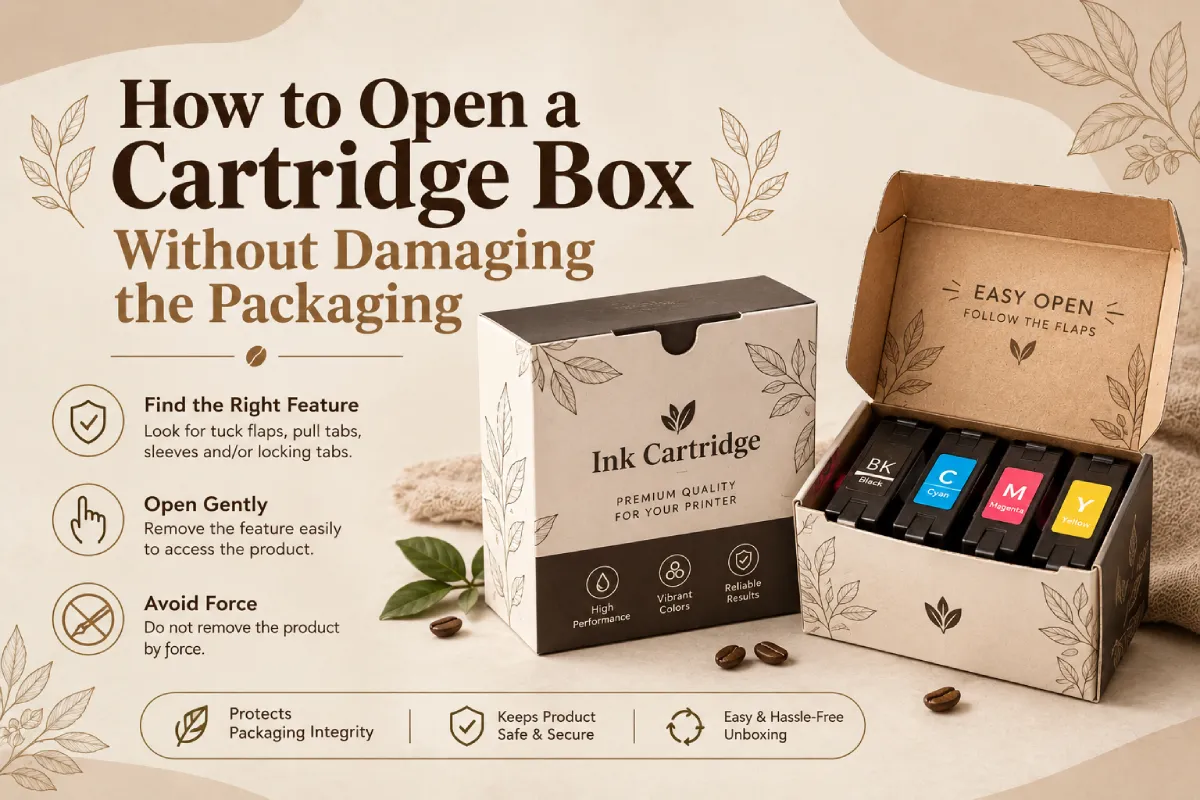
Have you ever stood at your desk, holding a cartridge box, turning it over and over again and again and still not figuring out how to open it cartridge perfectly? You are not alone. Opening a cartridge package should not feel like a struggle. It is experienced by people every single day. The product is fine almost. The confusion is in the packaging itself. A well-designed package gives you a clear way to access the product while keeping it protected during storage, handling, and shipping.
As a best custom box manufacturer in USA, we know cartridge packaging comes in many styles. Some boxes use tuck flaps, while others have pull tabs, sleeves, inserts, or locking tabs. The exact opening method depends on the box design and the product inside.
Here is the truth: cartridge packaging is not designed to be difficult. It is designed to protect. To open the cartridge simply first, check the cartridge type and look for its manufacturer’s opening instructions that is written clearly and don’t force or cut it. For beginners, use the proper tool or follow the device manual to avoid leaks, damage, or injury.
In this expert guide of Little Rock Packaging, we will explain how to open a cartridge package with different types of cartridge packing, the common types of cartridge boxes, how to open packaging without damaging it, and what makes a cartridge box truly easy to use.
Steps to Open a Cartridge Package Perfectly
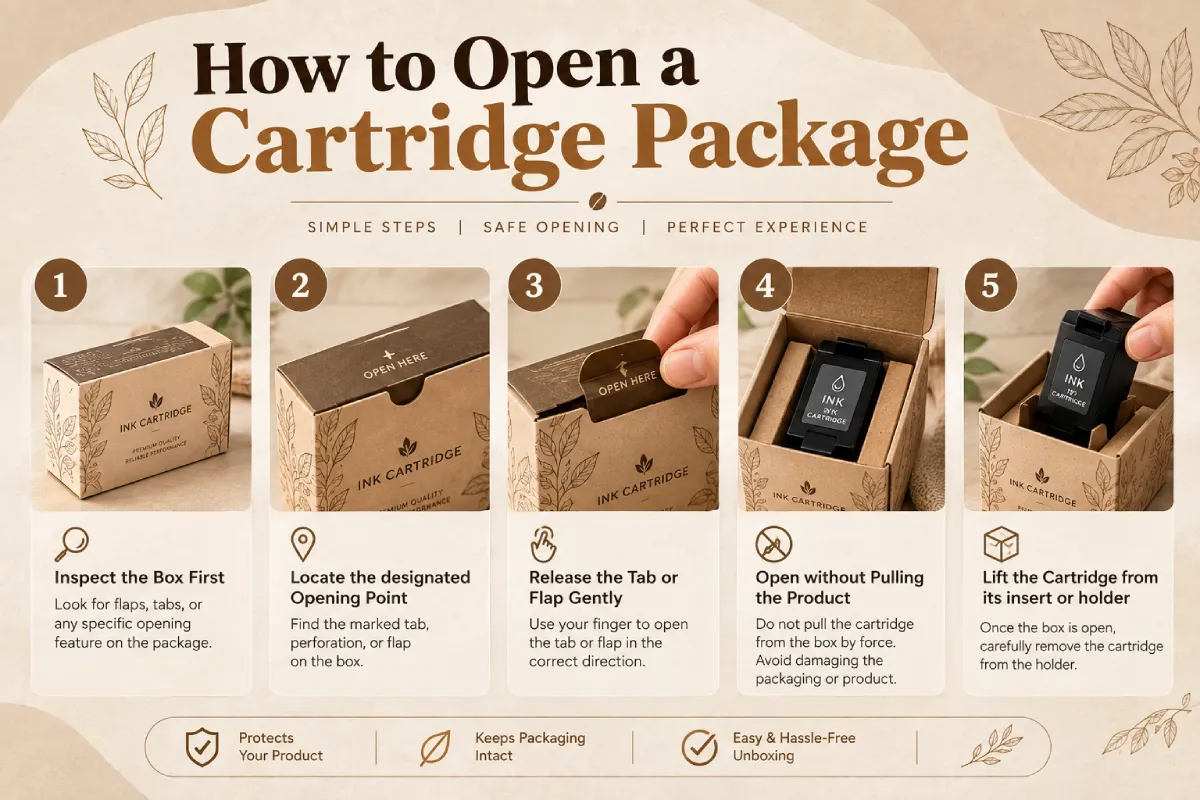
Let’s answer the main question first and answer it clearly. If you are trying to open a cartridge box, first look for the opening feature built into the packaging. Most professionally designed boxes have a specific flap, tab, perforation, or sleeve that tells you where to start.
Inspect the box first
Turn the box slowly and look for a tuck flap, pull tab, perforation, or locking tab. Most packaging will show you a subtle cue. Cue is a small crease, a dotted line, or a slightly raised tab.
Locate the Designated Opening Point
This is almost always at the top of the box, on one of the shorter ends, or along a side panel. Do not start from the bottom unless the box clearly indicates otherwise.
Release the tab or flap gently
If it is a tuck flap, press your thumb under the fold and lift slowly. If it has a pull tab, grip it between your fingers and pull in the direction indicated. If it is a sleeve, hold the outer box steady and slide the inner tray outward.
Open without pulling the product
Never grab the cartridge itself and use it to pull the packaging open. That puts pressure on the product and can cause damage before you have even used it.
Lift the cartridge from its insert or holder
Many cartridge boxes have an inner foam, cardboard insert, or moulded tray holding the product in position. Lift from the base rather than pulling from the top.
How Do Different Cartridge Boxes Open?
Not all cartridge packaging is built the same way. The opening experience depends entirely on the box style chosen during the design process. Understanding these styles helps you open any cartridge package with confidence.
Tuck-End Cartridge Boxes
Tuck-end boxes are among the familiar folding carton styles. They use flaps that fold into the box and hold the package closed. To open one, locate the tuck flap and gently release it. Once the flap is free, the top or bottom of the box can usually be opened. This style can provide a practical balance between accessibility, protection, and presentation.
Pull-Tab Cartridge Boxes
A pull-tab design gives the customer a clear opening point. Instead of searching for a hidden flap, the user can locate the tab and pull it as directed. This can make the opening experience feel quick and simple. Pull tabs can also be useful when a brand wants the package to have a more convenient opening experience without using a complicated structure.
Sleeve-Style Cartridge Packaging
Sleeve packaging normally uses an outer sleeve with an inner tray. The tray slides out of the sleeve to reveal the product. This style can create a more premium unboxing experience. It also gives packaging designers space to add branding to both the outer sleeve and inner tray. When opening a sleeve box, slide the tray out gently. Avoid pulling the product directly from the box.
Cartridge Boxes With Inserts
Some cartridge packages contain a custom insert inside the box. The insert keeps the product positioned in a specific place. This is especially useful when the product needs extra stability during handling and shipping. When opening this type of packaging, first open the outer box and then carefully remove the product from its holder. Do not force the product out of a tight insert.
Locking Cartridge Boxes
Locking tabs add another level of closure to a package. The tab fits into a matching section of the box and keeps the package closed. These boxes may take slightly more care to open because the closure is designed to stay secure. Look for the designated tab and release it according to the package structure. Avoid tearing the cardboard around the locking area.
How to Open a Cartridge Box Without Damaging the Packaging
Sometimes you want to keep the box in good condition. This may be important for premium packaging, storage, returns, or simply because you like the design.
Here are a few simple tips:
- Find the intended opening point first.
- Do not pull at glued seams.
- Avoid using excessive force.
- Open tuck flaps from their natural direction.
- Use pull tabs as intended.
- Do not pull directly on the product.
- Remove products from inserts carefully.
- Keep sharp tools away from the product and packaging unless the package instructions specifically require them.
A good cartridge box should guide the customer toward the correct opening point. Clear structural design can reduce confusion and make the unboxing experience smoother.
Important point to consider: Most packaging damage happens when a box is pulled open by force instead of following its closure design. Well-made vape cartridge packaging usually relies on tuck flaps, tab locks, or snug inserts, so a slow, gentle release keeps the edges and print intact. This matters even more with 510 vape cartridge packaging, where the insert holds the cartridge tightly and can tear if you rush it.
What Makes Cartridge Packaging Easy to Open?
Good packaging should protect the product without making access unnecessarily difficult. Several design elements can improve the opening experience:
Easy-Access Tabs
A visible tab gives the customer a clear place to start.
Perforations
Perforated sections can create a controlled opening point where appropriate.
Tuck Flaps
Tuck flaps offer a familiar opening method and can keep the box securely closed when designed correctly.
Pull Strips
Pull strips can provide a direct opening path and reduce confusion.
Slide-Out Trays
A tray-and-sleeve design can make opening feel smooth while creating a premium presentation.
Proper Sizing
The box should fit the product correctly. A package that is too tight can make removal difficult, while excessive empty space can allow unnecessary movement.
Protective Inserts
Inserts can hold the product in place and help create a more organized unboxing experience. The goal is to balance accessibility and protection. A package should be easy enough to open while still doing its job.
Cartridge Box Opening Mechanisms Compared
Each opening style has a context where it performs best. The right choice depends on your product, your customer, and your brand positioning.
| Opening Type | Ease of Use | Protection Level | Presentation | Best Application |
| Tuck End | High | Medium | Good | Everyday cartridge products |
| Pull Tab | Very High | Medium | Very Good | Convenience-focused packaging |
| Sleeve / Slide | High | High | Excellent | Premium brand presentation |
| Insert Box | High | Very High | Good | Fragile or precision products |
| Locking Tab | Medium | Very High | Medium | Secure or child-resistant packaging |
What Materials Are Used for Cartridge Boxes?
The material determines everything from the feel of the box in your hands to how well it protects the product inside. Four primary materials are used for cartridge packaging:
- Paperboard is the standard for most consumer cartridge boxes. It is lightweight, printable, and cost-effective. It works well for products that do not require heavy structural protection.
- Kraft Paperboard has a natural, unbleached look and feel. It is associated with eco-friendly and artisan branding. Kraft cartridge boxes communicate sustainability and a handcrafted identity, and they accept printing well despite their natural colour.
- Corrugated Board adds an air-gap layer between the outer faces, dramatically increasing impact resistance. For cartridges being shipped over distance or requiring extra protection during fulfilment, corrugated cartridge boxes are the practical choice.
- Rigid Board is the premium option. It does not fold — it is cut and assembled with a cover material applied over the structure. Rigid cartridge boxes feel heavy, substantial, and expensive. They are used when the packaging itself is part of the product experience and needs to communicate luxury or high value.
How to Choose the Right Cartridge Packaging
Before ordering cartridge boxes, consider more than the design. Ask these questions and LRP has also provided the answers of all these questions:
What are the product dimensions?
Accurate measurements help create a better-fitting package.
How fragile is the product?
Fragile products may need inserts or stronger packaging.
How should customers open it?
Choose between tuck flaps, pull tabs, sleeves, or another suitable structure.
Will it be shipped?
Shipping can require stronger materials and better internal support.
Where will it be displayed?
Retail packaging may need strong visual branding and shelf appeal.
What is your budget?
Material, printing, finishing, inserts, and box construction can all affect cost.
How many boxes do you need?
Order volume can influence the most practical production approach.
Does your brand have sustainability goals?
Material selection can be considered alongside recycling and waste requirements.
Why Custom Cartridge Boxes Can Improve the Unboxing Experience
A customer interacts with the package before they interact with the product. That first moment matters. Custom cartridge boxes can be designed to provide a better product fit, clear branding, organized presentation, and a smoother opening experience. A well-planned box can also help a brand maintain consistent presentation across different products.
Custom inserts are another useful option. They can position the product inside the package while giving the interior a cleaner and more professional appearance. For brands selling through retail or online channels, packaging can become an important part of the overall customer experience. Competitor packaging pages also emphasize custom fit, inserts, branded printing, and presentation as core cartridge packaging features.
Frequently Asked Questions
Q: How do you open a cartridge box without damaging it?
Find the designated opening point first. It is usually a tuck flap, pull tab, or sleeve end. Apply pressure at the correct point and open slowly. Never force a glued area or pull directly on the product.
Q: What is the easiest type of cartridge box to open?
Pull-tab cartridge boxes are the easiest to open. One clean pull releases the lid completely. Sleeve-style boxes are also very easy and provide a premium experience simultaneously.
Q: What is cartridge packaging used for?
Cartridge packaging protects the product during shipping and storage, presents the brand at the point of sale, and provides the customer with a clear, safe way to access the product inside.
Q: Can cartridge boxes have pull tabs or locking tabs?
Yes. Pull tabs and locking tabs can be included as part of a custom structural design when they suit the product and opening experience.
Q: How can cartridge packaging protect the product during shipping?
A properly sized box, suitable material, and protective insert can help reduce product movement and provide structural support during handling and transportation.