
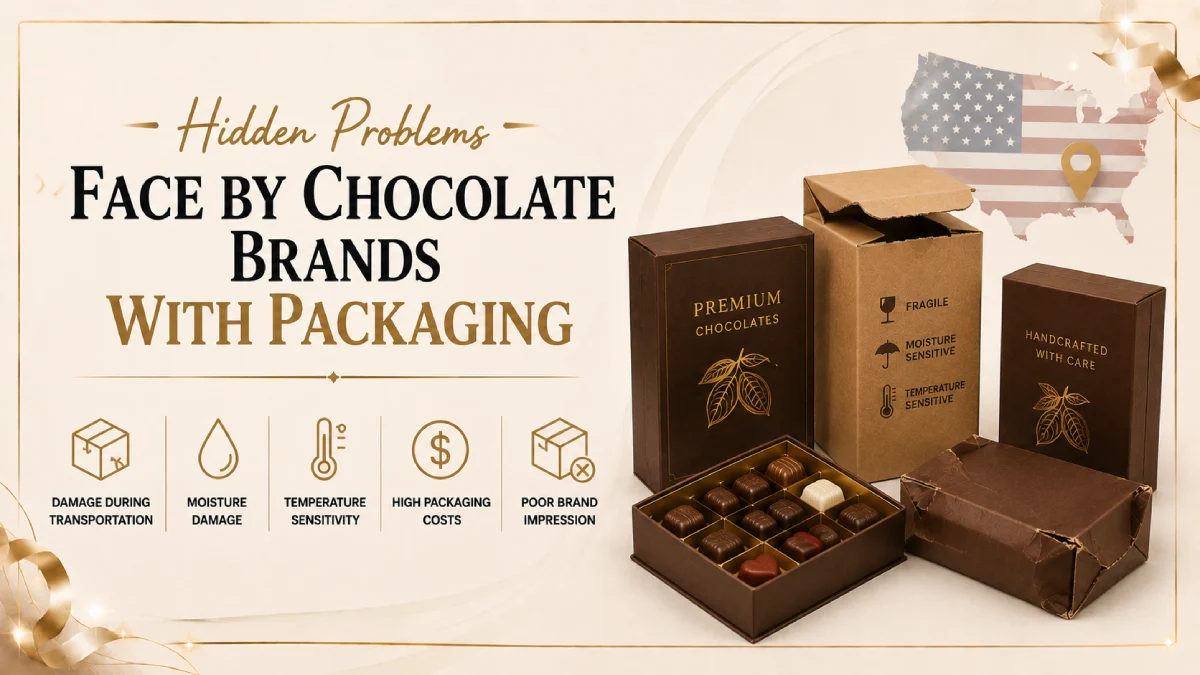
Hidden Problems Face by Chocolate Brands With Packaging

Luxury chocolate brands like Sprinkles Milk, Lily’s Sea Salt, Cadbury Dairy Milk, Mr. Beast spend thousands perfecting flavors, ingredients, and presentation. Yet many still lose customers because of one overlooked factor: packaging experience.
Today, customers judge a chocolate product long before tasting it. They notice the texture of the box, the quality of printing, the opening experience, and even how the packaging appears in social media photos. A weak packaging experience can quietly reduce trust, damage perceived product value, and hurt repeat purchases even when the chocolates themselves are exceptional.
This is why modern businesses are no longer searching for ordinary boxes. They are actively looking for custom chocolate packaging solutions that improve product protection, customer experience, shipping performance, and brand positioning at the same time.
Many discuss printing styles or decorative finishes. However, the real problems in chocolate packaging are far deeper than aesthetics alone. Brands today struggle with shipping damage, rising fulfillment costs, repetitive packaging designs, poor social media presentation, and sustainability expectations from customers.
Custom Packaging: Core Part of the Chocolate Experience
The chocolate market has changed significantly over the last few years. Consumers no longer purchase chocolates only for taste. Packaging now influences whether a product feels luxurious, gift-worthy, premium, or mass-produced.
This is especially true for:
- Artisan chocolate brands
- Luxury gifting businesses
- Handmade chocolate companies
- eCommerce chocolate stores
- Corporate chocolate suppliers
Customers expect packaging that feels intentional and refined. They want a complete experience rather than a simple product container. That shift has forced packaging companies to rethink how custom chocolate boxes are designed. Modern packaging is now expected to perform multiple functions at once:
- Protect delicate chocolates
- Create visual appeal
- Support sustainable branding
- Improve unboxing experiences
- Photograph well for social media
- Strengthen customer memory of the brand
The companies that understand these expectations are the ones gaining long-term customer loyalty.
Biggest Packaging Mistake Chocolate Brands Still Make
One of the most common mistakes in the confectionery industry is focusing too heavily on appearance while ignoring functionality. Many brands order beautiful custom printed chocolate boxes with premium finishes, foil stamping, and elegant graphics. However, once the product enters shipping channels, those visual elements mean very little if the chocolates arrive damaged.
Temperature sensitivity remains one of the largest issues in chocolate packaging. Heat exposure during transit can ruin presentation, texture, and customer trust within hours. This becomes even more problematic for brands selling online or shipping products internationally. Customers receiving melted chocolates rarely blame the courier alone. They blame the brand experience as a whole.
Experienced packaging manufacturers now approach chocolate packaging differently. Instead of treating packaging as decorative branding material, they engineer packaging systems specifically for product protection. Modern chocolate boxes and packaging solutions increasingly include insulated layers, rigid support structures, and protective inserts that stabilize chocolates during delivery.
Some premium manufacturers even develop airflow-focused internal designs that reduce heat buildup during transportation. These structural improvements are often invisible to customers initially, but they directly affect customer satisfaction and product quality once the box is opened.
Why Luxury Packaging Is Quietly Increasing Costs
Luxury packaging creates strong visual impact, but many businesses fail to calculate the operational cost behind it.
Oversized rigid packaging, heavy magnetic closure boxes, and unnecessary structural bulk often increase:
- Shipping expenses
- Warehousing costs
- Fulfillment complexity
- International delivery pricing
This issue becomes serious as brands scale operations. For years, many companies associated heavy packaging with premium quality. However, modern packaging strategy has shifted toward intelligent structural efficiency instead of excessive material usage.
Leading packaging companies like “Little Rock Packaging” now create lightweight luxury packaging systems that maintain a premium appearance without dramatically increasing shipping weight.
Foldable magnetic boxes, hybrid rigid board structures, and compact insert systems are becoming increasingly popular because they preserve presentation while improving operational efficiency.
Why Most Chocolate Packaging Feels Forgettable Today
The luxury chocolate market has become visually repetitive. Many brands use nearly identical packaging concepts:
- Black boxes with gold foil
- Generic ribbon closures
- Minimalist layouts without personality
- Predictable luxury color palettes
Consumers now see these styles everywhere across Instagram, retail shelves, and online stores. As a result, much of the packaging begins to feel interchangeable. The brands gaining attention in 2026 are not necessarily using louder packaging. Instead, they are creating more memorable sensory experiences.
Packaging psychology has become one of the most important trends in premium chocolate branding. Rather than relying only on visual design, modern brands focus on how packaging feels during interaction. Soft-touch coatings, layered openings, textured materials, and carefully engineered magnetic closures create emotional reactions that customers remember.
This emotional memory matters more than most brands realize. Customers are far more likely to share products online, recommend them to others, and reorder products when the packaging experience feels distinctive. The goal is no longer simply to make packaging look expensive. The goal is to make it feel intentional and emotionally engaging.
The Rise of Packaging Designed for Social Media
Social media has changed packaging requirements completely. Many chocolate products that look beautiful in person fail visually in photography and video content. Highly reflective finishes, poor contrast, and flat packaging structures often create disappointing results in product photography.
For brands relying on influencer marketing or organic social sharing, this creates a serious branding problem. LRP Follows modern packaging design the packaging of your brand with digital presentation in mind. Matte laminations are frequently preferred over glossy finishes because they reduce glare during photography. Typography is selected for readability on mobile screens, and color palettes are tested for social media visibility.
Some advanced manufacturers even evaluate packaging prototypes under studio lighting conditions before production begins. This level of detail demonstrates how packaging has evolved from a manufacturing decision into a marketing strategy.
Sustainable Packaging Is No Longer Optional
Consumer expectations around sustainability continue to grow rapidly. Customers increasingly prefer brands using recyclable, biodegradable, and environmentally responsible materials. However, many businesses struggle to balance sustainability with premium presentation.
Historically, eco-friendly packaging often looked plain or unfinished. That perception is changing. Modern eco-luxury packaging combines sustainability with sophisticated branding through the use of:
- Kraft paper textures
- FSC-certified materials
- Soy-based printing inks
- Embossed minimalist logos
- Natural matte finishes
These packaging styles feel more authentic and refined rather than overly decorative. Interestingly, many luxury brands are now intentionally simplifying packaging aesthetics because consumers increasingly associate minimalism with premium quality and sustainability.
Why Smart Packaging Is Becoming a Retention Tool
One of the most overlooked opportunities in chocolate packaging is customer retention. Many businesses treat packaging as a one-time experience. Once the chocolates are consumed, the customer disappears from the brand ecosystem entirely.
Modern packaging strategy is changing that. Little Rock is among in the leading companies now integrate retention-focused elements directly into custom chocolate box packaging. QR-based reorder systems, loyalty incentives, personalized inserts, and branded storytelling cards are increasingly being used to encourage repeat purchases.
This transforms packaging from a passive container into an active marketing channel. The psychological effect is powerful. Customers feel more connected to brands that continue the experience beyond the initial purchase.
Best Materials Used in Custom Chocolate Packaging
Material selection affects far more than appearance alone. The right material influences product protection, printing quality, sustainability, and perceived value.
- Rigid board Packaging remains one of the most popular choices for luxury custom chocolate gift box packaging because it offers strong structural durability and premium presentation.
- Cardboard packaging continues to dominate retail packaging because it balances affordability with customization flexibility.
- Kraft paper packaging has become increasingly popular among sustainable brands looking to create eco-conscious packaging identities without sacrificing visual appeal.
- Corrugated packaging is commonly used for shipping protection, particularly for eCommerce chocolate businesses managing large-scale deliveries.
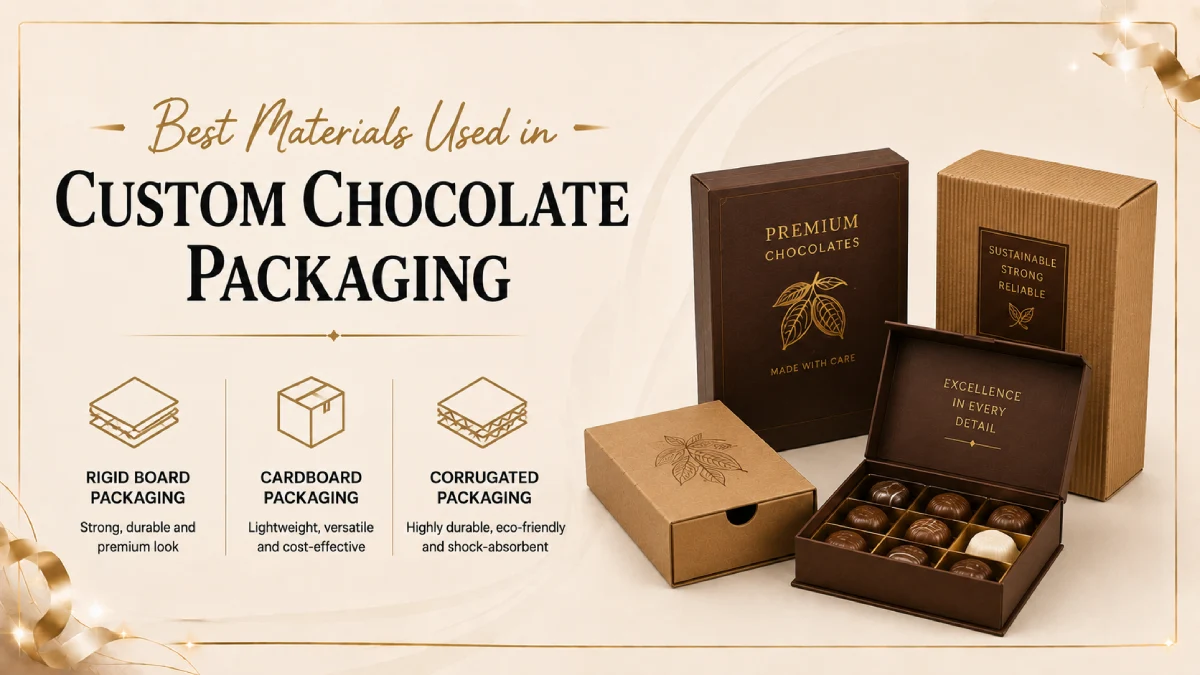
Each material serves a different strategic purpose depending on the brand’s positioning, shipping model, and customer expectations.
Final Thoughts
Chocolate packaging has evolved far beyond decorative box design. Today, packaging directly affects customer perception, shipping performance, social media visibility, sustainability positioning, and repeat purchasing behavior. Brands that still treat packaging as a simple printing task are falling behind competitors that understand the psychology behind premium presentation.
The strongest custom chocolate packaging solutions in 2026 are the ones that combine structure, branding, functionality, and emotional experience into a single cohesive system. Customers may initially buy chocolate for taste, but they remember brands because of how the experience made them feel. That experience begins with the packaging.
Frequently Asked Question
What types of finishes are available for custom chocolate packaging?
Little Rock packaging and Black Bird manufacturers offer finishes such as matte lamination, gloss coating, foil stamping, embossing, debossing, Spot UV, and soft-touch coatings. These finishing techniques improve both shelf appeal and luxury perception.
Could businesses request custom chocolate packaging samples before bulk production?
Yes. Littl Rock provides physical samples or digital mockups before final production. This allows businesses to evaluate material quality, structural durability, print accuracy, and finishing details before placing large orders.
What is the average turnaround time for custom chocolate packaging orders?
Production timelines usually range between 7–15 business days depending on packaging complexity, order quantity, finishing requirements, and shipping location. Luxury rigid packaging may require additional production time.
Are eco-friendly custom chocolate boxes available?
Yes. we offer recyclable, biodegradable, and FSC-certified packaging materials along with soy-based printing inks for environmentally conscious brands.
Can businesses fully customize chocolate packaging designs?
Little Rock manufacturers allow full customization of size, shape, materials, inserts, printing styles, finishing methods, and branding elements based on the specific needs of the chocolate brand.